
How a Harlem Library and Journal Changed the World

The Schomburg Center for Research in Black Culture marks its centennial with a spotlight on a major publishing platform of the Harlem Renaissance
Courtesy Schomburg Center for Research in Black Culture

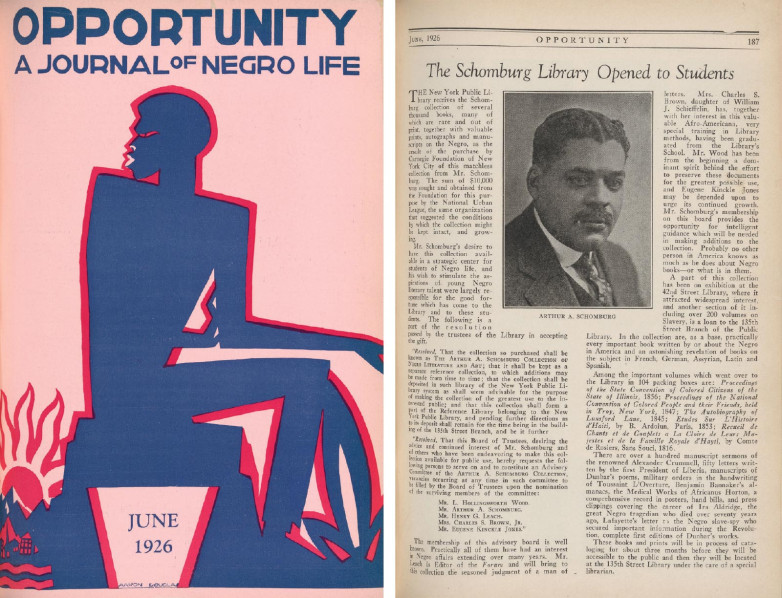
Left: Art by Aaron Douglas on the cover of the June 1926 issue of Opportunity, Journal of Negro Life. Right: An article about Arthur A. Schomburg’s library in the same issue. 

The New York Public Library (NYPL)’s Schomburg Center for Research in Black Culture, a world-renowned research library and cultural hub, turned one hundred this year. It all began in the 1920s during the cultural and political movements known as the Harlem Renaissance and the New Negro Movement, when a community of Black writers, historians, scholars, and activists campaigned to have a dedicated reference section consisting of materials by and about people of African descent within the 135th Street Library.

With the support of the head librarian, Ernestine Rose, and Catherine Latimer, the first Black librarian hired by NYPL, the Division of Negro Literature, History and Prints was opened to the public on May 8, 1925. The next year, on May 6, the private library of the Afro-Puerto Rican bibliophile, historian, and civil rights activist Arthur “Arturo” A. Schomburg was purchased for the new division with the help of a $10,000 grant from the Carnegie Corporation of New York. Schomburg’s extraordinary collection of books, pamphlets, art, artifacts, and manuscripts (which included Juan Latino’s Ad Catholicum (1573), believed to be the first book written by a Black man) became a publicly accessible nexus for Black achievement—a role that continues to this day.

Another important and related event occurred in 1923, when the New York City-based National Urban League, a civil rights organization dedicated to economic and social justice and interracial collaboration, launched a new monthly magazine called Opportunity, Journal of Negro Life. It carried news of the League’s activities and presented, in a readable form to the general public, serious research on the social issues impacting African Americans by some of the best Black scholars of the time. One such scholar was the sociologist Charles S. Johnson, the journal’s founder and editor. From the beginning, Opportunity published book reviews, literary columns, and creative writing. It also showcased art on the covers, published exhibition reviews, and included photos of work by Black artists, as well as artifacts from African countries. This journal would soon play a major role in nurturing and sustaining scholars, writers, and other artists during the Harlem Renaissance.

At the same time that the campaign to create a “Department of Negro Literature and Art” at the public library was getting started, the September 1924 issue of Opportunity announced its first literary contest—“An Opportunity for Negro Writers.” Coincidentally, the winners were listed and published in the May 1925 issue, the same month that the Division of Negro Literature, History and Prints opened its doors at the 135th Street Library. First prize for poetry went to twenty-three-year-old Langston Hughes for “The Weary Blues.” Hughes would publish over fifty poems in Opportunity and become known as the Poet Laureate of the Harlem Renaissance. Other contest winners in that issue who would go on to acclaim included poet Countee Cullen, writer Zora Neale Hurston, writer and journalist Eric D. Walrond, sociologist E. Franklin Frazier, and poet, folklorist, and literary critic Sterling Brown. For the next few years, this annual literary contest, which won national and international attention, provided an outlet for many emerging writers. As Johnson wrote in the twenty-fifth anniversary issue published in the fall of 1947, “Opportunity did not begin as a literary journal, but in its penetration of the lives and spirits of a new generation, it became the vehicle of some of the most intensely human expression of its day.”

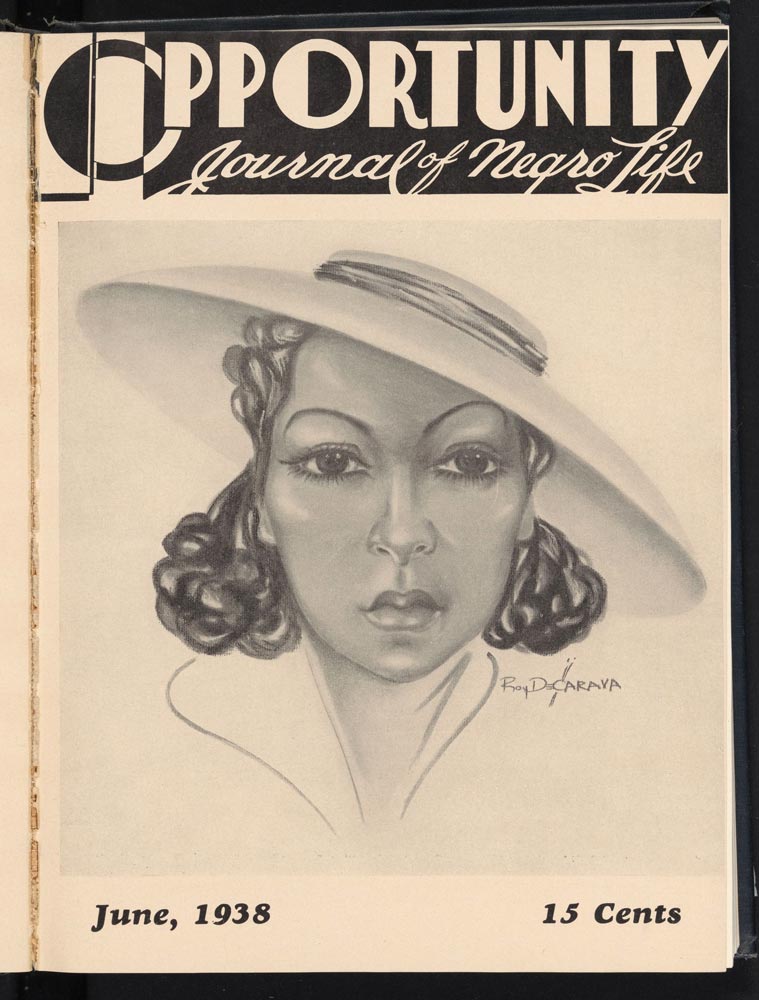
A drawing by Roy DeCarava on the cover of the June 1938 issue.
1/7
Courtesy Schomburg Center for Research in Black Culture

A drawing by Roy DeCarava on the cover of the June 1938 issue.

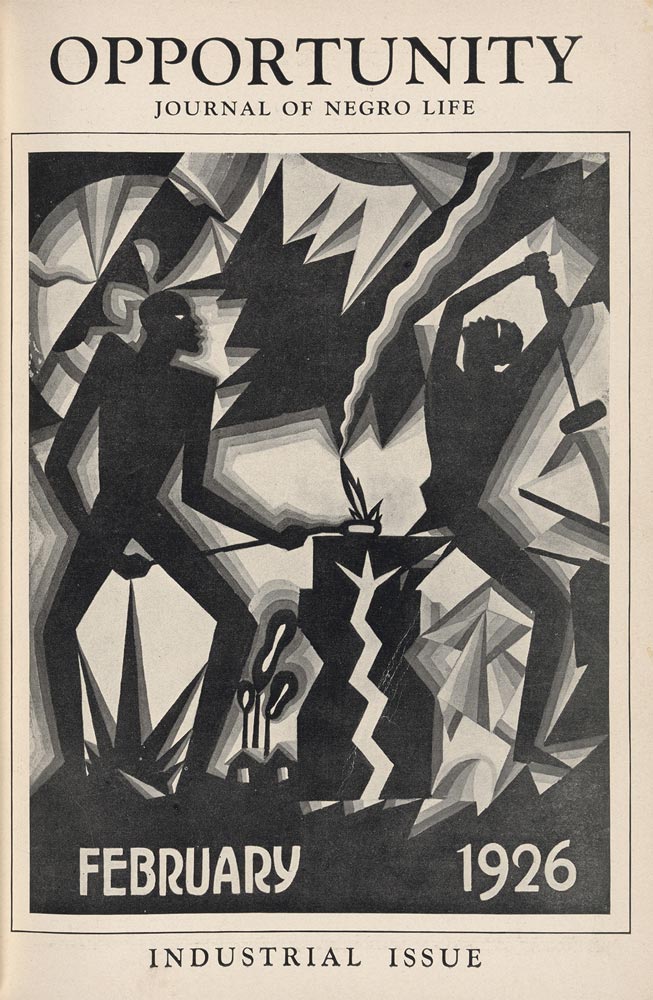
Art by Aaron Douglas on the cover of the February 1926 issue.
2/7
Courtesy Schomburg Center for Research in Black Culture

Art by Aaron Douglas on the cover of the February 1926 issue.

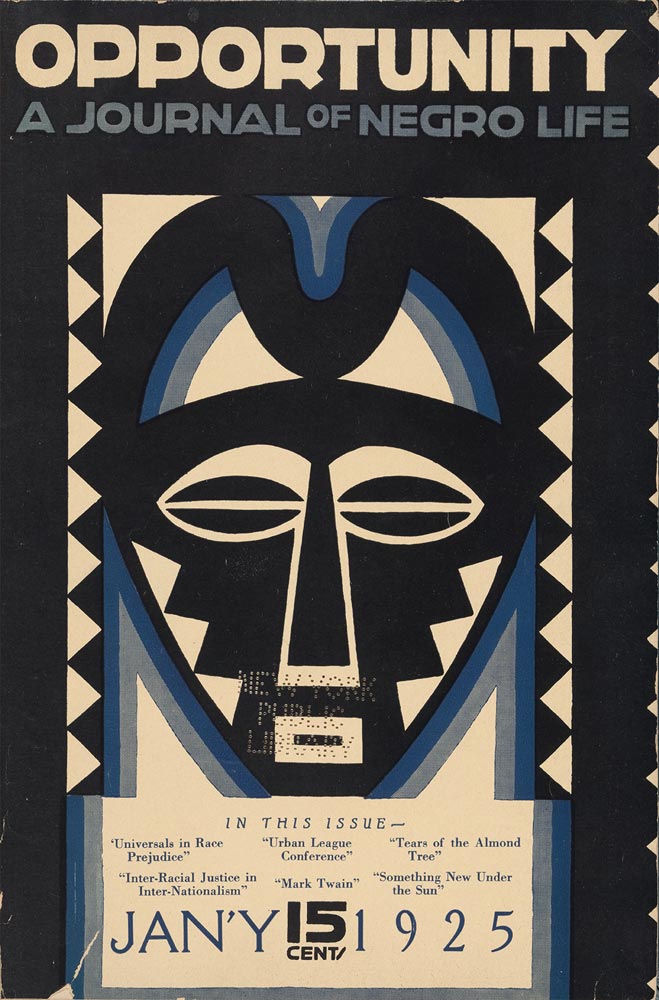
Art by Winold Reiss on the cover
3/7
Courtesy Schomburg Center for Research in Black Culture

Art by Winold Reiss on the cover of the January 1925 issue of Opportunity, Journal of Negro Life. 

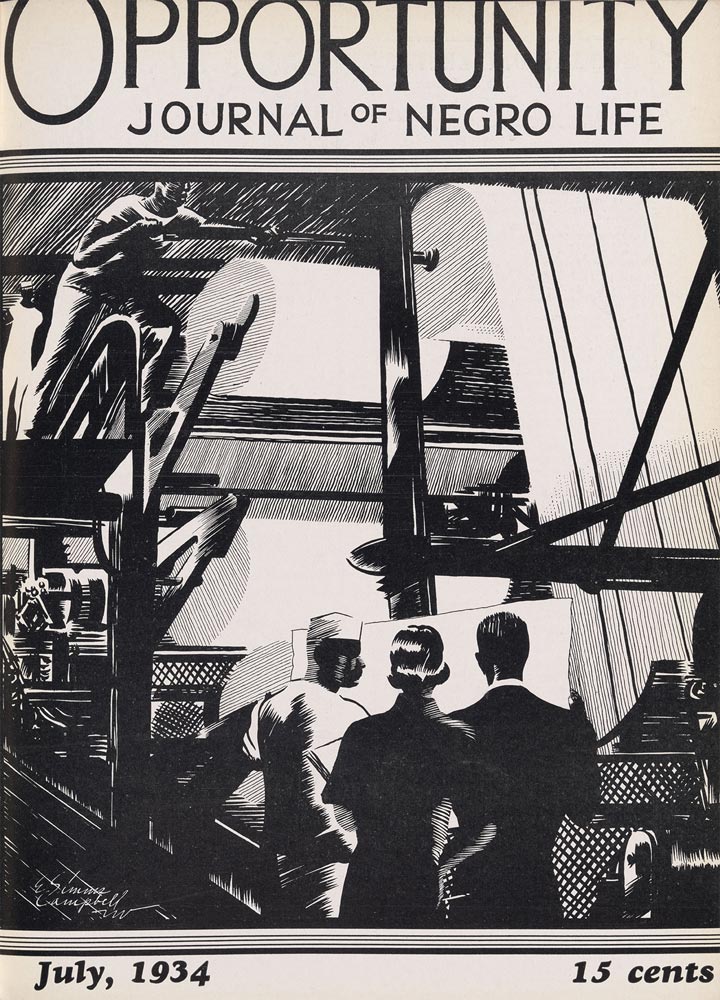
Art by E. Simms Campbell on the cover
4/7
Courtesy Schomburg Center for Research in Black Culture

Art by E. Simms Campbell on the cover of the July 1934 issue.

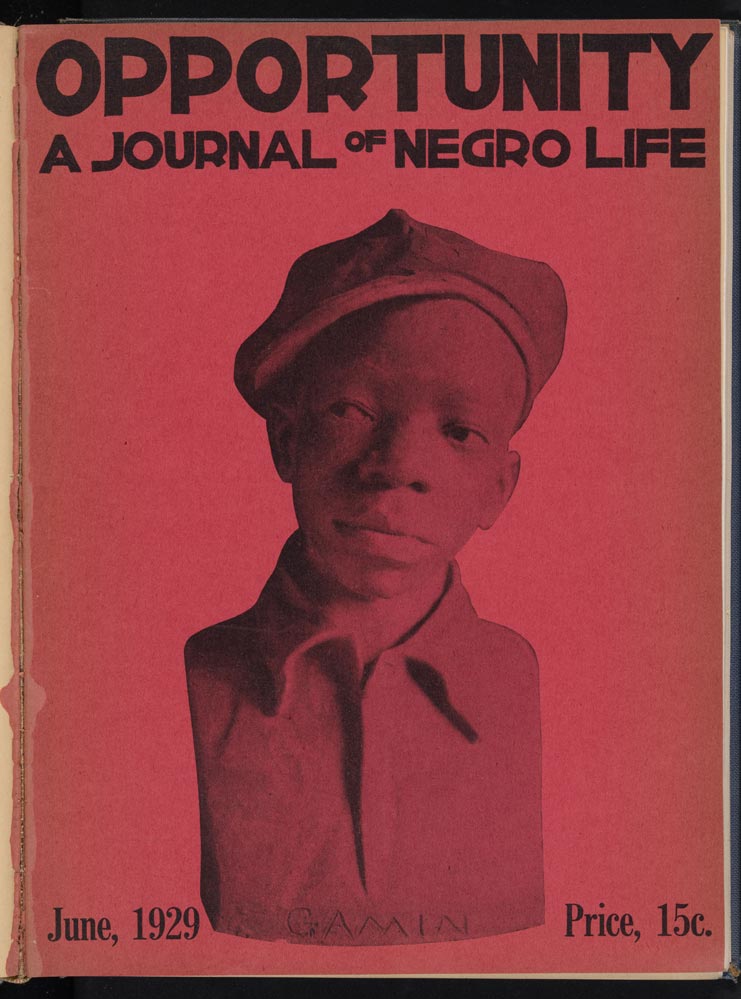
A sculpture by Augusta Savage on the co
5/7
Courtesy Schomburg Center for Research in Black Culture

A sculpture by Augusta Savage on the cover of the June 1929 issue of Opportunity, Journal of Negro Life.

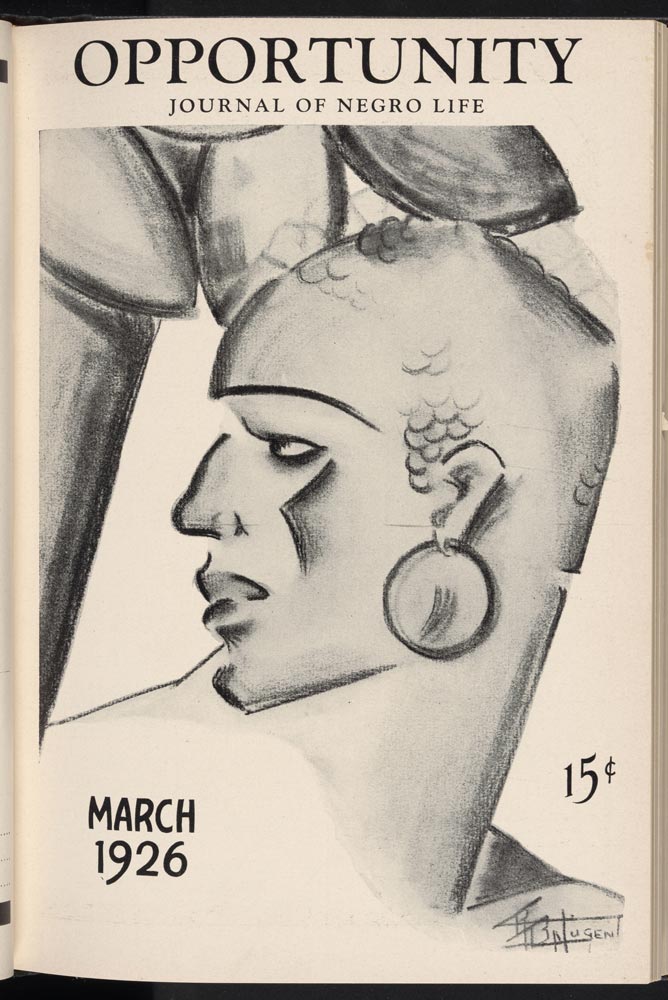
Art by Richard Bruce Nugent on the cover
6/7
Courtesy Schomburg Center for Research in Black Culture

Art by Richard Bruce Nugent on the cover of the March 1926 issue of Opportunity, Journal of Negro Life. 

Poems by Langston Hughes
7/7
Courtesy Schomburg Center for Research in Black Culture

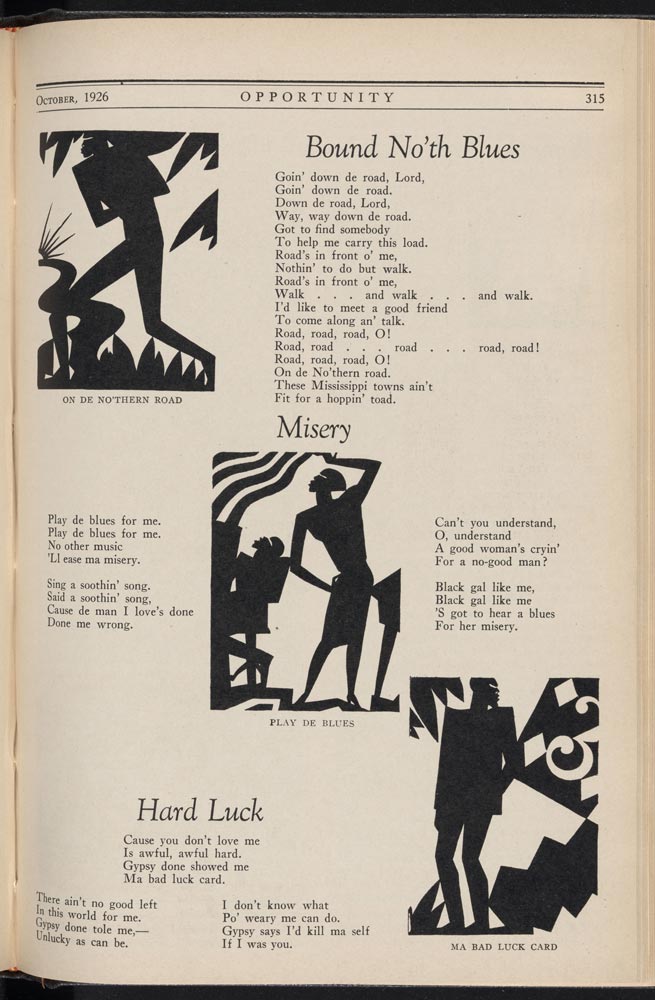
Poems by Langston Hughes with art by Aaron Douglas in the October 1926 issue of Opportunity, Journal of Negro Life.

In anticipation of the Schomburg Center’s centennial, I became increasingly interested in its symbiotic relationship with this influential periodical. For instance, the Carnegie Corporation contributed $8,000 to help launch Opportunity; similarly, funds were given to purchase Schomburg’s collection for the library. Schomburg contributed several articles to Opportunity, including “My Trip to Cuba in Quest of Negro Books,” published in 1933 when he was curator of the Division of Negro Literature, History, and Prints, a position he undertook in 1932. Gwendolyn Bennett, a poet and graphic artist who organized poetry readings and book discussions at the 135th Street Library, also wrote a monthly literary column for Opportunity from 1926 to 1928 called “The Ebony Flute,” a “literary and social chit-chat.” In the November 1930 issue of Opportunity, a twenty-year-old Fisk University student named Lawrence D. Reddick contributed a personal story called “Mister Charlie!” about his repeated harassment by two cops on his way home from his job at a coffee shop. Reddick became the curator of the Schomburg Collection after Schomburg’s death in 1938.

Even after the departure of founding editor Charles S. Johnson and the economic difficulties of the Great Depression, Opportunity continued to be an important outlet for research, literature, and art under its new editor, Elmer A. Carter. This was especially crucial because the nation’s economic crisis hit African American communities the hardest. The journal published important articles about labor issues, unsatisfactory conditions of public education and housing in Harlem, anti-lynching bills, the power of the Black vote in the North, and discrimination in the military. Opportunity continued to be a showcase for art and artists. Throughout its publishing run are illustrations and photographs by some of the leading visual artists of the era, such as Aaron Douglas, Winold Reiss, Miguel Covarrubias, and Richard Bruce Nugent. E. Simms Campbell, the Black cartoonist and illustrator associated with Esquire magazine, got his start with Opportunity. A twenty-three-year-old art student named Romare Bearden wrote an article, “The Negro Artist and Modern Art,” for the December 1934 issue. Bearden would become famous for his collages of Black life and is considered one of the most important African American artists of the twentieth century. 

World War II created another challenge for Opportunity with wartime restrictions on paper, printing, and personnel. In 1943, it became a quarterly while still publishing writers such as Ann Petry, whose 1946 novel The Street would become the first book by an African American woman to sell over a million copies.

The National Urban League stopped publishing Opportunity at the end of 1949. As a Schomburg Center Centennial project, the complete run of Opportunity (1923-1949) is being digitized and made available on the NYPL Digital Collections website to be viewed freely, without restrictions, thanks to permission granted by the National Urban League. And in yet another serendipitous moment in our shared history, the National Urban League is planning in 2025-26 to open the Urban Civil Rights Museum, New York’s first-ever museum dedicated to civil rights, in its new Harlem headquarters. We hope to have all issues available online by the time it opens. All issues from 1923 through the late 1930s are currently accessible at digitalcollections.nypl.org.

When Schomburg passed away in 1938 at the age of sixty-four, Elmer Carter Anderson penned a tribute to him in the July 1938 issue of Opportunity: 

Arthur Schomburg—His was the passion of the collector combined with the zeal of the racial crusader. … He left to posterity the Schomburg collection, worthy monument of his life work. For this alone scholars will forever owe him a debt of gratitude. To his people and to his generation he gave all of his energy, his vision, and the strength of his spirit, and more than this no man can give.

We are celebrating one hundred years of the Schomburg Center until June 2026 with a wide array of special events, exhibitions, and more to mark this milestone and continue this legacy. In the 100: A Century of Collections, Community, and Creativity exhibition, you can view many extraordinary items from the Schomburg Center’s collections and learn more about its history. You can even see a physical copy of the May 1925 issue of Opportunity. The story of this library and the community that championed it is filled with remarkable people and important achievements. One of those was Opportunity, and thanks to the Schomburg Center, you too can now explore the art, poetry, and hard-nosed journalism that can be found within its pages.